
A change of scenery did not result in a change of fortunes for Maryland men’s basketball.
Trading chill and rain for warmth and sunshine, the Terps nonetheless fell flat against another Big Ten foe, absorbing a 67-55 setback by host UCLA on Saturday night before an announced 6,879 at Pauley Pavillion in Los Angeles.
The game turned midway through the first half when the Bruins scored 16 unanswered points in a 4:04 stretch to turn a 19-18 deficit into a 34-19 advantage. Maryland scored just two points for the rest of the stanza and trailed 38-21 at halftime.
The Terps did narrow the deficit to 56-51 in the second half with 6:18 to go after a pair of free throws by redshirt junior point guard Myles Rice. But the Bruins shut the door on a potential comeback by scoring 11 of the game’s final 15 points to tag Maryland with its third straight loss and sixth in the past seven games.
“It is encouraging that our response in the second half was good,” coach Buzz Williams told the Maryland Sports Radio Network. “We’ve got to continue to find ways [on] how to put it together from start to finish more instead of always playing from behind or playing from behind for long, long stretches of the game. So arguably, the best second half we’ve played in Big Ten play, but the first half was too eerily similar to many of our other halves.”
The Terps (7-9, 0-5 Big Ten) got senior power forward Elijah Saunders’ first double-double of the season with a season-high 17 points and a career-best 12 rebounds. Freshman point guard Darius Adams chipped in 13 points, six rebounds and three assists.
Junior small forward Eric Dailey Jr. helped UCLA (11-5, 3-2) end a two-game losing skid by amassing 15 points and nine rebounds. Sophomore shooting guard Trent Perry chipped in 16 points, six rebounds, two assists and two steals, and senior power forward Tyler Bilodeau added 10 points and two assists.
Both teams were without key players. Maryland went its fifth consecutive game without senior power forward Pharrel Payne (right knee), while the Bruins played its second straight contest without senior shooting guard Skyy Clark (hamstring).
Here are three developments from Saturday’s outcome.
Maryland’s anemic offense a disastrous matchup for the Bruins’ stingy defense
Offensive efficiency has been a season-long problem for the Terps. That issue was only exacerbated by UCLA.
The Bruins switched from man-to-man defense to zone, and the results were startling. After Maryland opened the game connecting on five of its first seven shots (71.4%), the offense converted only four of its last 23 attempts in the first half (17.4%).
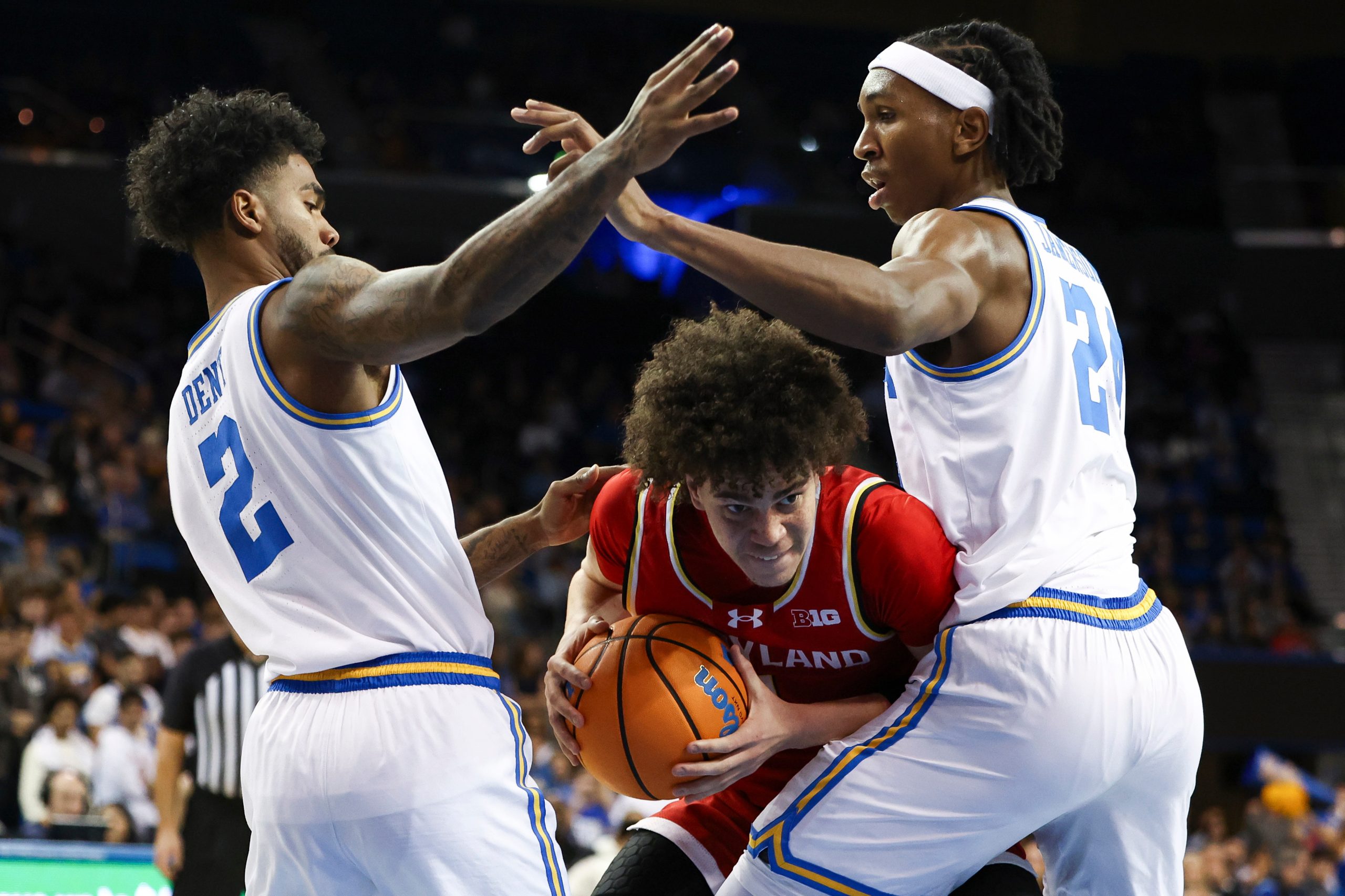
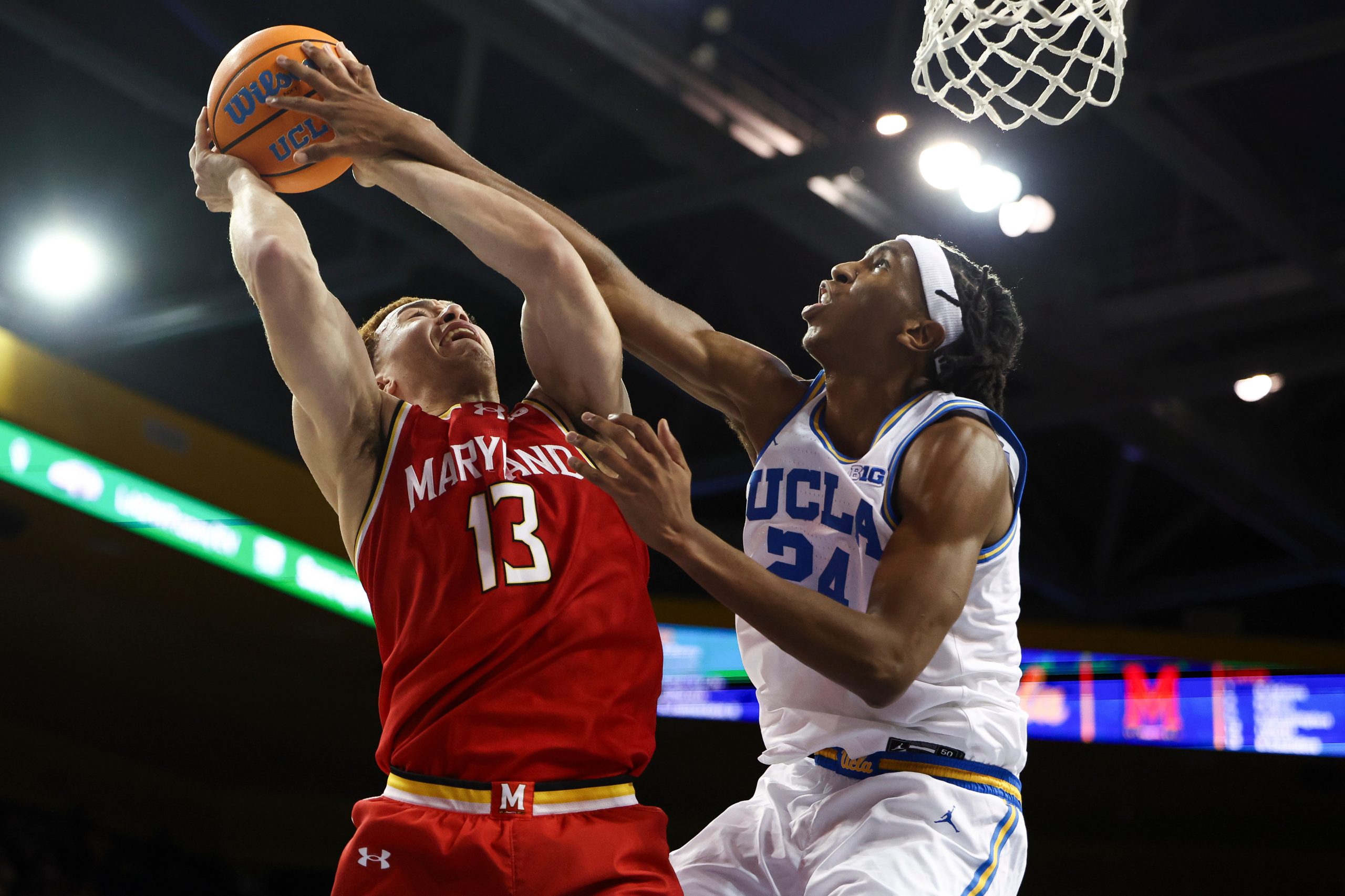
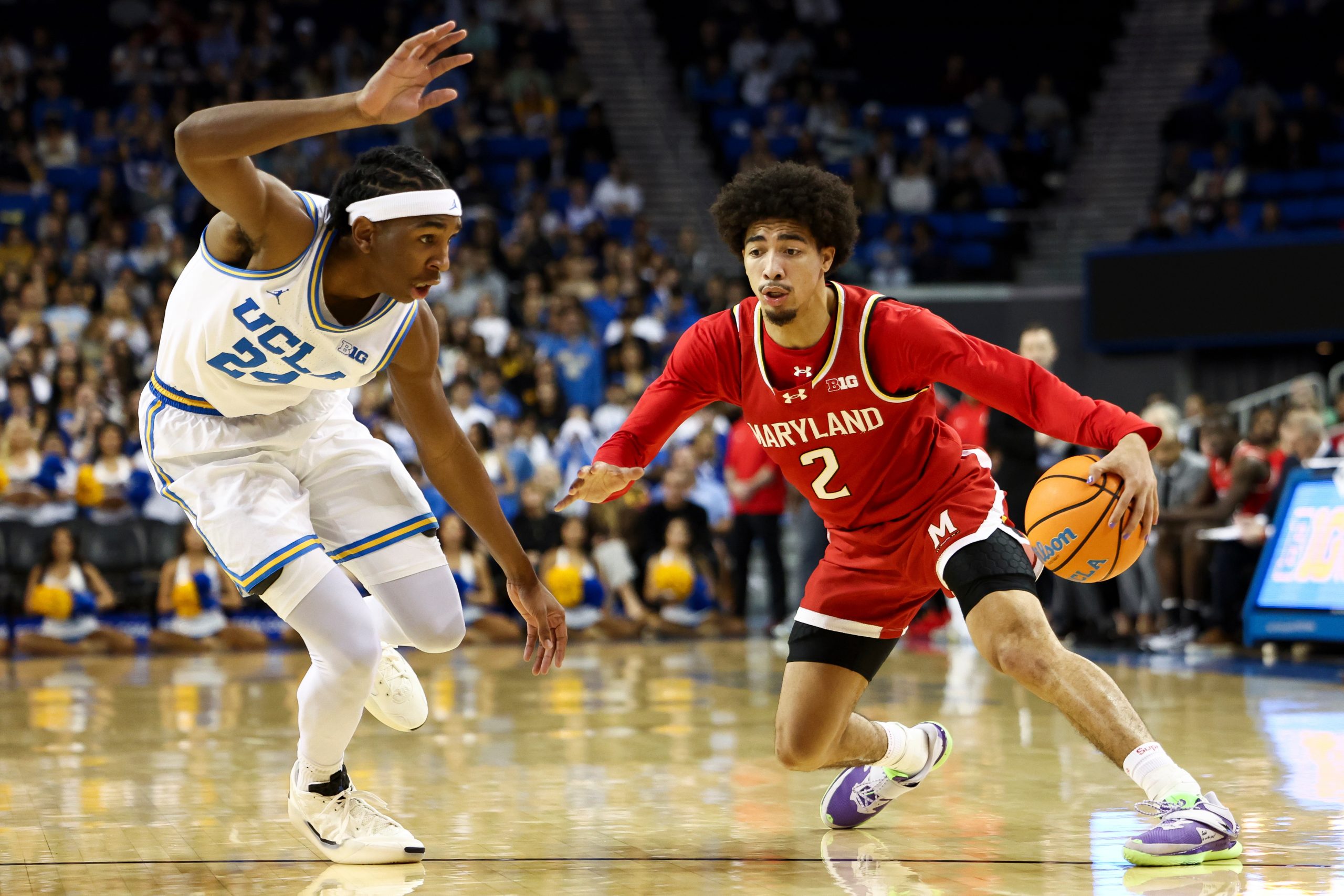
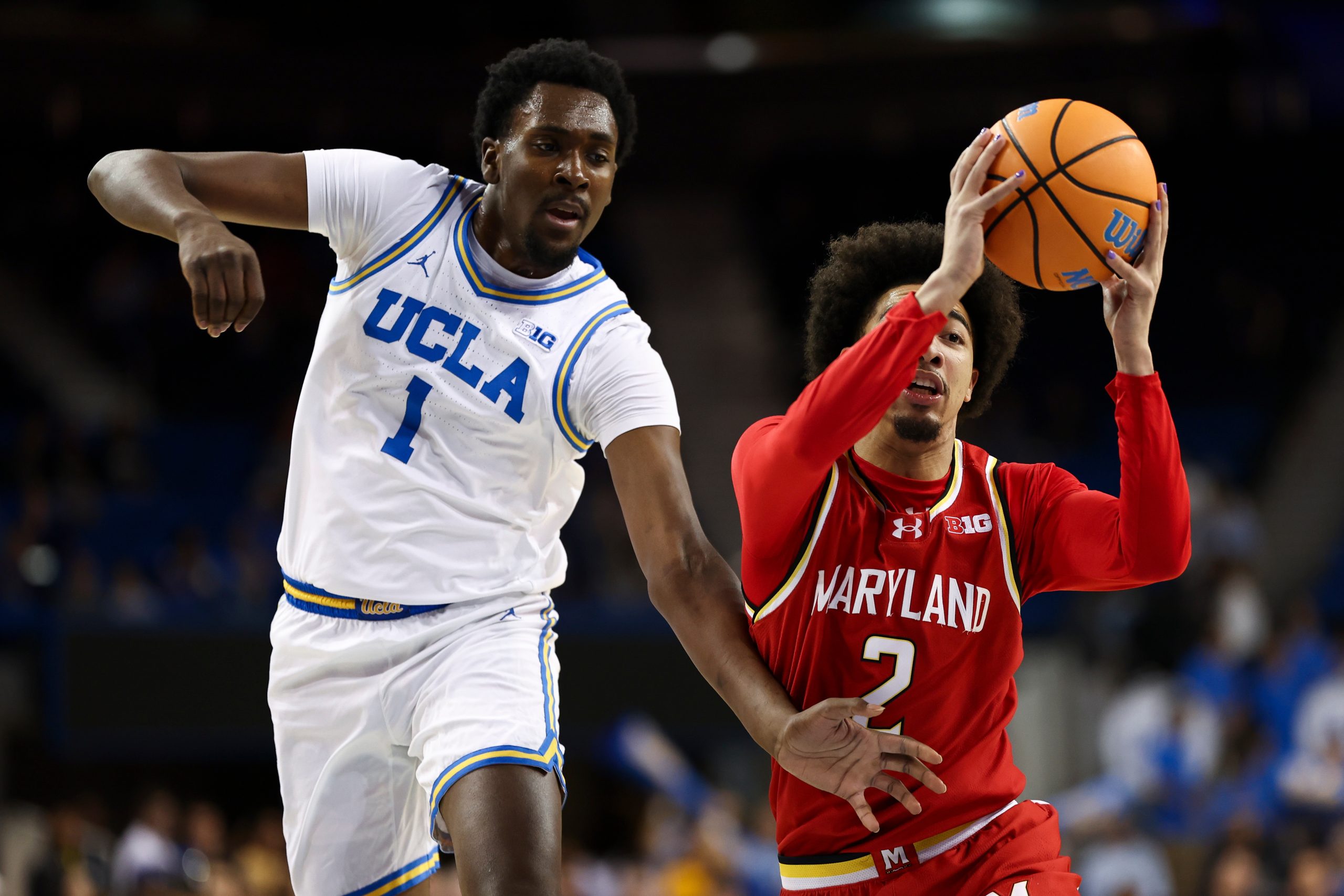
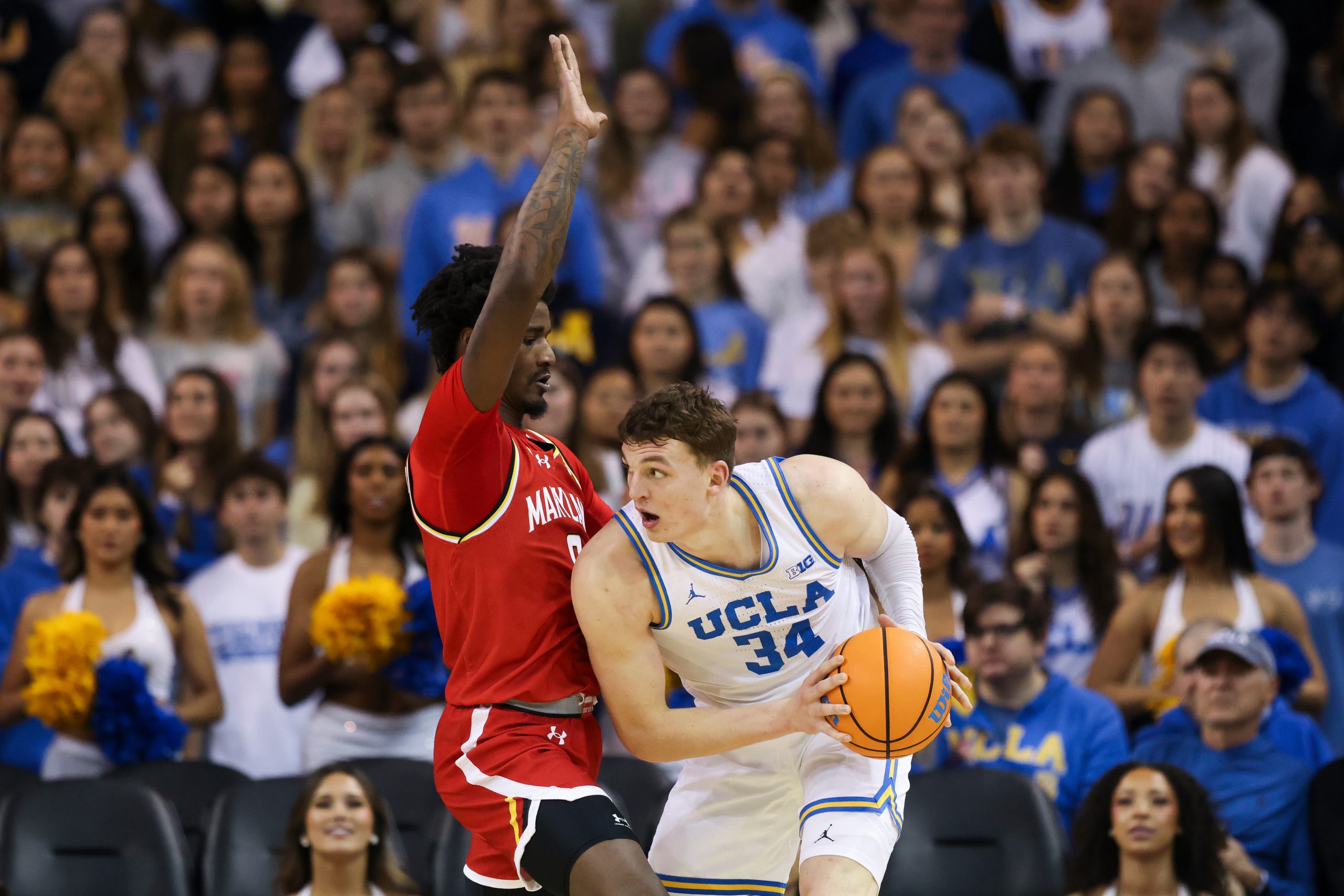
One mode of attack against a zone defense is perimeter shooting, but that has been another vulnerability for the Terps, who shot 12 of 61 (19.7%) from 3-point range in back-to-back setbacks to Oregon and Indiana. On Saturday, they shot just six of 33 behind the 3-point line (18.2%), which did not force UCLA to vacate its zone.
Maryland scored just 21 points by halftime, marking the team’s second-lowest output at intermission since compiling 19 points in an eventual 80-72 setback at No. 23 Virginia on Dec. 20. At that point, the mountain was too steep for the team to climb, but Williams took some encouragement from the team’s effort in the second half.
“I thought that in the second half, we were much better at the things we could control and we had more poise,” he said. “Our pace was a little better.”
The Terps’ strength is fading
For much of the season, Williams has emphasized how much Maryland needs to cultivate points from the free throw line. Conference rivals appear to have gotten the message.
Against the Bruins, the Terps went to the foul line only 15 times — their fourth lowest total of the season low and third lowest against Big Ten foes. The team did not take a free throw until there was 4:14 left in the first half and took only two for the opening frame.
“Making zero free throws in the first half versus nine in the second half is a big difference,” Williams conceded.
Entering the game, UCLA ranked seventh in the league in most personal fouls per game at 17.9. But Maryland too often did not attack the Bruins’ zone defense and settled for mid- and long-range jump shots, which did not incur fouls.
The Terps thrived at the free throw line against non-Big Ten opponents, averaging 27.5 attempts. But against conference foes, Maryland’s average has dropped to 19.4.
The reduced number of trips to the foul line might have also affected the Terps’ proficiency. After converting 77.2% (233 of 302) of their free throw attempts against nonleague competition, they have shot just 66.0% (64 of 97) in Big Ten games.
Maryland keeps giving the ball away
Turnovers once again tripped up the Terps.
Maryland committed 13 giveaways, which UCLA gladly turned into 16 points. On the flipside, the Bruins turned the ball over only six times, which resulted in nine points for the Terps.
Maryland’s generosity was particularly dispiriting in the first half. The team gave the ball away 10 times to UCLA’s one, and the Bruins had 12 points off of turnovers to the Terps’ zero.
Maryland’s inability to protect the ball negated an impressive effort in the rebounding department. The team produced a 48-29 advantage on the boards and capitalized with a 24-9 margin in second-chance points.
“I think playing with 10 turnovers in the first half versus three in the second half is a big difference,” Williams said. “Obviously, if you don’t give it to the other team, you have the ball more.”
Entering the game, Maryland was tied with USC for the most turnovers per game at 13.3. That statistic won’t get better until there’s a dedicated effort to protect the ball.
Have a news tip? Contact Edward Lee at eklee@baltsun.com, 410-332-6200 and x.com/EdwardLeeSun.